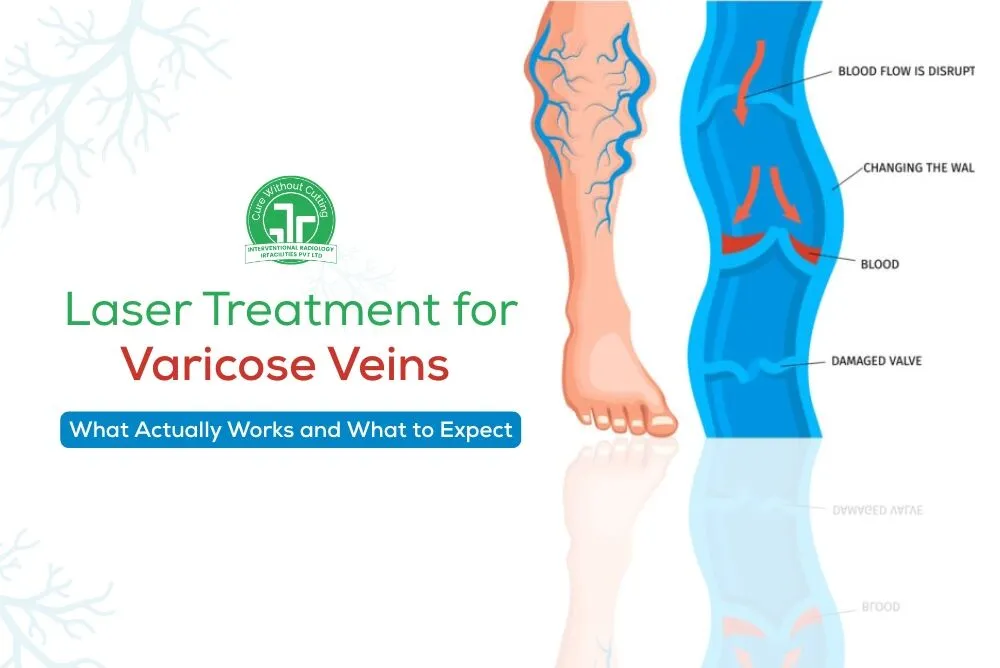
Around 3 PM, the legs start complaining. Not dramatically. Just a low pull. A heaviness that wasn't there at 9 AM. By evening, the ankles are thick and the veins are pushing through the skin — twisted, visible, uncomfortable.
Most people at this point do one of two things.
They Google it, land on something involving surgery and a six-week recovery, and quietly close the tab. Or they buy compression stockings, wear them for a few weeks, stop, and just... accept it. Neither works. Not long term.
Laser treatment for varicose veins has been around long enough now to have a serious track record. The procedure is short. The recovery is fast. And most people who've had it done say the same thing — they wish they hadn't waited so long.
Why Surgeons Stopped Stripping Veins
For most of the 20th century, varicose vein treatment meant an operating theatre.
General anaesthesia. Incisions. The damaged vein physically stripped out through those cuts. Then stitches, dressings, and several weeks off your feet.
It worked. But barely anyone wanted to go through it. And for good reason.
Bruising was significant. Scarring was visible. Recovery was slow. Recurrence rates were higher than specialists were satisfied with.
Varicose vein laser treatment arrived with a completely different approach.
The vein doesn't need to come out. It needs to close. Once sealed shut from the inside, the body handles everything else — slowly breaking down the collapsed vein and rerouting blood through healthier vessels nearby.
No removal. No large incisions. No operating theatre. Much faster recovery. That's not a small upgrade. That's a fundamental rethink of how the problem gets solved.
Today, varicose veins treatment without surgery is not just possible — it's the preferred standard in most interventional radiology centres across India and globally.
The Two Types of Laser Treatment — In Plain Terms
1. Endovenous Laser Ablation (EVLA / EVLT)
This is the main procedure for larger varicose veins — the deep ones that ache, bulge, and cause most of the daily discomfort.
A fine laser fibre is inserted into the vein through a puncture no bigger than a needle tip. The doctor watches the whole thing on live ultrasound — real-time imaging showing exactly where the fibre sits as it moves through the vein.
Once in position, the fibre is slowly withdrawn. As it pulls back, it releases laser energy — controlled heat that damages the vein wall just enough to collapse and seal it shut. The vein closes from the inside.
Over the following weeks, the body absorbs the sealed vein. Blood quietly shifts to healthier veins nearby. The process is invisible, internal, and requires nothing from the patient.
EVLA treatment takes around 45 minutes start to finish. Local anaesthetic. No hospital admission. Most patients drive home themselves.
2. Laser Surface Treatment
For smaller veins and spider veins sitting near the skin surface, this is simpler.
No fibre. No puncture. A focused laser beam passes through the skin and targets the blood inside the vein directly. The heat collapses the vessel without breaking the skin at all.
Sessions are short. Patients walk in, get treated, walk out. Most return to normal activity the same afternoon.
6 Real Reasons Patients Choose This Over Surgery
1. Faster Recovery
Surgical stripping meant two to four weeks of restricted movement — minimum. After endovenous laser ablation, most patients are back to light daily activity within one to two days.
Some return to work the next morning.
For anyone with a job, a family, or a life that doesn't pause easily — that difference is everything.
2. Minimal Discomfort
The area is numbed before anything starts. During the procedure, patients sometimes notice a faint warmth or mild pressure. Occasionally a brief sting when the anaesthetic goes in. That's usually the worst of it.
Afterwards — some bruising along the treated vein. Tenderness that feels more like post-exercise soreness than post-surgical pain. Standard paracetamol manages it within a few days.
3. No Visible Scarring
One needle-sized entry point. That's it.
No incisions. No stitches. No wound care at home. Once healed — most patients can't locate the entry point at all. Nothing on the skin to show a procedure happened.
4. Results Show Up Fast
Within the first few days, the treated vein begins to flatten as it closes and starts breaking down. Full results take six to twelve weeks — but early visible change arrives quickly.
That early difference matters. It confirms the treatment worked. It makes the recovery feel purposeful rather than uncertain.
5. Symptom Relief Comes Before the Cosmetic Result
This catches most patients off guard.
The aching, the heaviness, the restless discomfort at night — these often ease within the first week. Before the vein has fully disappeared. Before the cosmetic result is anywhere near complete.
Feeling better in the legs comes first. Looking better follows.
6. The Results Actually Last
Five-year follow-up data on laser ablation consistently shows closure rates between 90 and 95 percent. Recurrence is lower than with surgical alternatives.
When performed by a trained specialist in interventional radiology for varicose veins — using proper imaging throughout — the results hold. Not for a season. For years.
Varicose Vein Laser Treatment Cost in India — What to Know
One question almost everyone asks before booking: what does this actually cost?
Varicose vein laser treatment cost in India varies depending on the number of veins being treated, the clinic's location, the specialist's experience, and whether imaging is included in the package.
Generally speaking, laser-based treatment in India is significantly more affordable than comparable procedures in Western countries — without any compromise in technology or specialist skill.
At IRFacilities, treatment packages are structured transparently — covering the pre-procedure duplex ultrasound, the laser procedure itself, compression stockings, and follow-up imaging in a single, clearly quoted price. No hidden additions. No surprise charges on the day.
It's worth asking specifically what any quoted price includes. A lower headline number that excludes the scan or follow-up appointment isn't necessarily the better deal.
The more important question isn't just cost — it's value. A procedure performed by an experienced interventional radiologist, with proper imaging guidance and structured aftercare, delivers results that last. Cutting corners on the specialist or the process to save a small amount upfront rarely pays off long term.
Who Is This Right For?
Most adults with symptomatic varicose veins are suitable candidates. But a proper assessment always comes first.
A specialist needs to understand which veins are affected, how deep they sit, and where the valve failure is actually originating. What's visible on the surface doesn't always reflect what's happening inside.
A duplex ultrasound scan is standard before treatment. It maps blood flow through the entire venous system — identifying failed valves, tracking how blood is compensating, and pinpointing exactly where intervention should be focused.
Without it, treatment is guesswork. With it, the plan is specific, precise, and built around what's actually happening in your veins.
Pregnancy is usually a reason to wait. Hormonal changes during pregnancy cause veins to behave differently, and many improve naturally after delivery.
For most other patients — the answer at consultation is yes. Here's what we found. Here's the plan. Here's what to expect.
What Treatment at IRFacilities Looks Like
Minimally invasive varicose vein treatment should be performed by an interventional radiologist — not a general clinic that added vein treatment to its service list, and not a cosmetic centre running it as a side offering.
At IRFacilities, varicose vein laser treatment is led by Dr. Sandeep Sharma — an interventional radiologist with deep specialisation in minimally invasive vascular procedures. Every case starts with a thorough clinical assessment and duplex ultrasound mapping. Nothing is assumed. Nothing is rushed.
The process patients go through:
Consultation: full clinical assessment, symptom history, duplex ultrasound mapping. You leave understanding what's happening and what the treatment plan looks like.
Procedure day: outpatient setting, local anaesthesia, live ultrasound guidance throughout. Around 45 minutes. Then home.
Aftercare: compression stockings for a short period, clear activity guidance, and a follow-up appointment with repeat imaging to confirm the vein has closed properly.
Dr. Sandeep Sharma's approach is straightforward: accurate diagnosis first, precise treatment second, and clear communication throughout. Patients are never left guessing about what's happening or why.
No ambiguity. No rushing. No vague instructions on the way out.
The Part That Doesn't Get Said Enough
Most people file varicose veins under "things to sort eventually."
They manage. Compression stockings. Sitting when they can. Avoiding certain shoes. Working around a problem instead of fixing it. And eventually stretches into years.
The veins get worse. The skin around them changes. Activities get quietly dropped — not dramatically, just gradually — because standing too long has become too uncomfortable. A lower standard of daily comfort gets accepted as just how things are now. It isn't inevitable.
Varicose veins progress. That's just their nature. But varicose veins treatment without surgery — short, outpatient, local anaesthetic, home the same day — is far less of a disruption than most people spend years imagining it to be.
The procedure takes less time than most people's lunch break. The recovery takes less time than most people's annual leave.
If You've Been Putting This Off
Laser treatment for varicose veins is proven. Minimally invasive. Built around patients who have actual lives and can't afford weeks of downtime.
The procedure is short. Recovery is fast. Results are lasting.
If your legs have been bothering you consistently — in ways that affect how you move through your day — that's not something to keep managing around.
Book a consultation with Dr Sandeep Sharma at IRFacilities today. Get the ultrasound done. Understand exactly what's happening. Then fix it.
Ready to Discuss?
Share your symptoms and reports with our team. We help you understand whether you need treatment now or simple lifestyle changes and follow‑up.