Bleeding Embolisation Treatment in India

Treating Internal Bleeding Through Image-Guided Procedures

Support in Insurance Claim
Collaborative Environment
Without Fabrication
Short Hospital Stay
4.9 Rating on Google

Key Benefits of Bleeding Embolisation Treatment

Minimally Invasive

Small incision procedure with minimal tissue damage, reducing pain and recovery time significantly.

Painless Procedure

Performed under local anesthesia with sedation, ensuring patient comfort throughout the procedure.

Quick Recovery

Faster healing process with reduced hospital stay compared to traditional surgical methods.

Improved Outcomes

Effective drainage with lower risk of complications.

What Is Bleeding Embolisation and When Is It Needed?

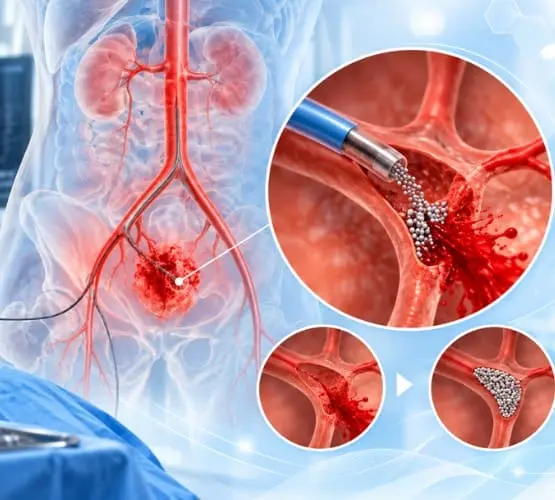
What happens during bleeding embolisation? The doctor makes a small puncture, usually near the groin or wrist, and passes a narrow tube called a catheter into an artery. Live X-ray images help guide it towards the blood vessel suspected of bleeding.

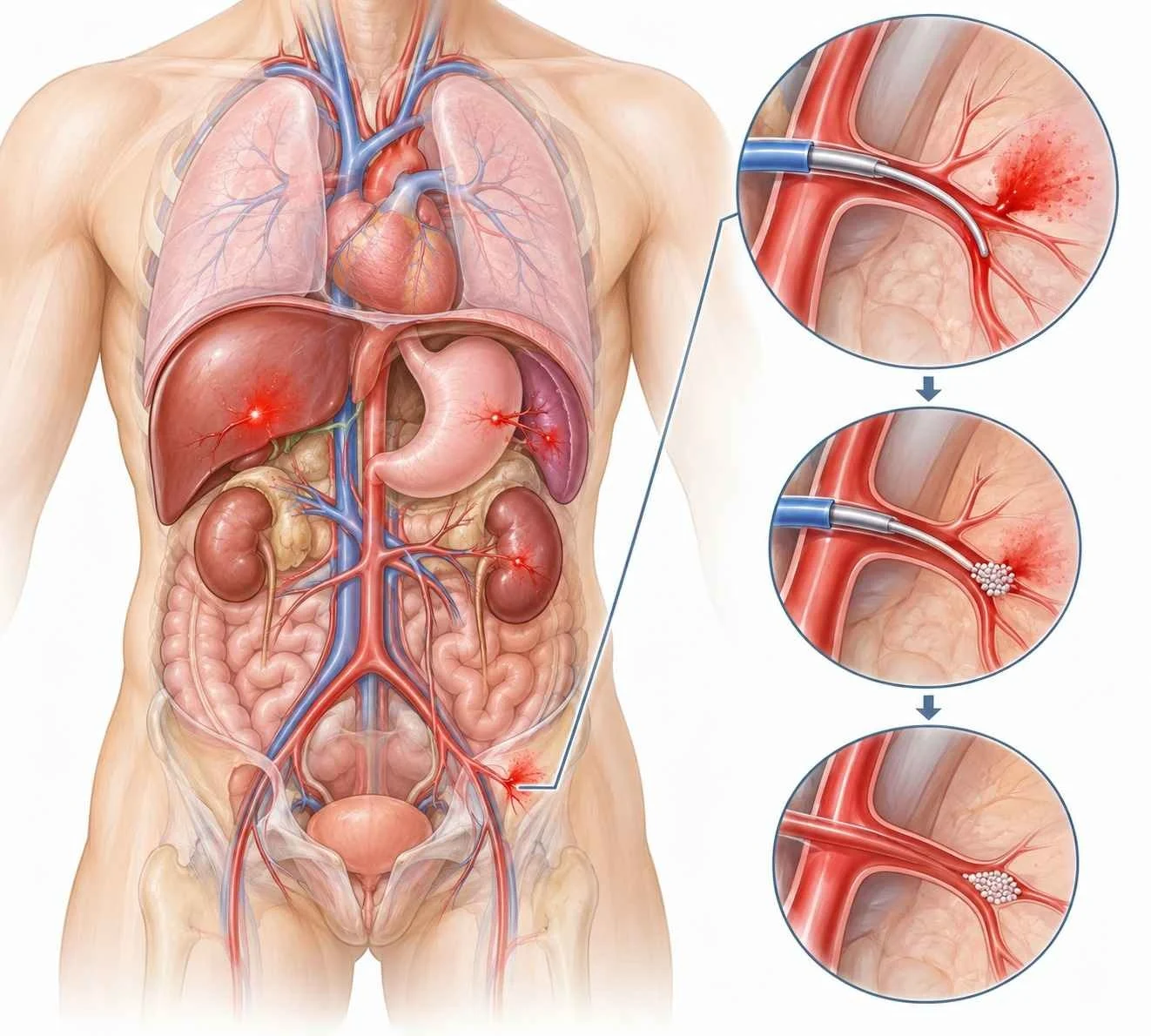
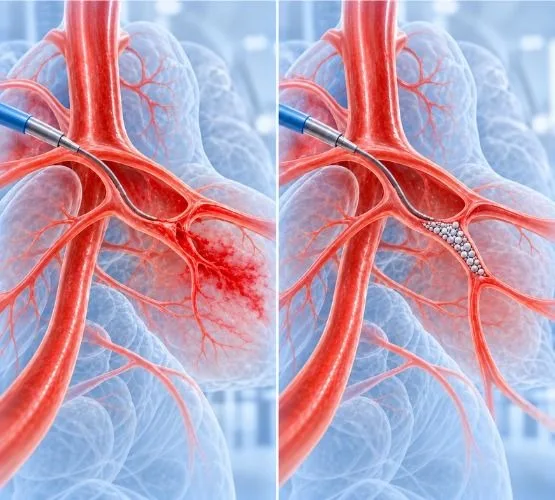
Once the correct vessel is reached, the doctor may place tiny coils, gelatin sponge, particles, or medical glue to reduce or stop blood flow through the injured area. The material is chosen according to the size and location of the artery. Careful planning matters.

Doctors generally consider embolisation when bleeding persists, returns after earlier treatment, or comes from an injured artery seen on a scan. A CT angiogram may help locate the problem before the procedure.

Not every patient needs embolisation. Bleeding from enlarged veins, for instance, may require a different approach. The right treatment depends on the cause, the patient's stability, and the findings of the medical team.

Book Appointment
What Is Bleeding Embolisation and When Is It Needed
Types of Bleeding Treated With Embolisation

Types of Bleeding Treated With Embolisation

Bleeding embolisation can be used for several conditions, but the technique is planned differently for each patient.

Gastrointestinal bleeding may come from an ulcer or an abnormal artery in the stomach or intestines. Endoscopy is often used first. If arterial bleeding continues or returns, embolisation may be considered.

Kidney bleeding sometimes develops after PCNL, a procedure used to remove large kidney stones. An injured artery may cause persistent blood in the urine. Selective renal artery embolisation aims to close that branch while preserving as much healthy kidney tissue as possible.

A gastroduodenal artery pseudoaneurysm is another reason for urgent assessment. This abnormal blood-filled pouch can form after pancreatitis, trauma, or surgery and may rupture.

Embolisation is also considered for selected arterial injuries after accidents or operations. These situations need prompt medical evaluation. Some patients need surgery instead, particularly when bleeding is severe or several injuries must be treated at once.

Book Appointment
How Is the Bleeding Embolisation Procedure Performed

How Is the Bleeding Embolisation Procedure Performed?

Before embolisation, the treating team checks blood pressure, haemoglobin, kidney function, and available scans. Someone with heavy bleeding may first need fluids, blood transfusion, or other emergency care.

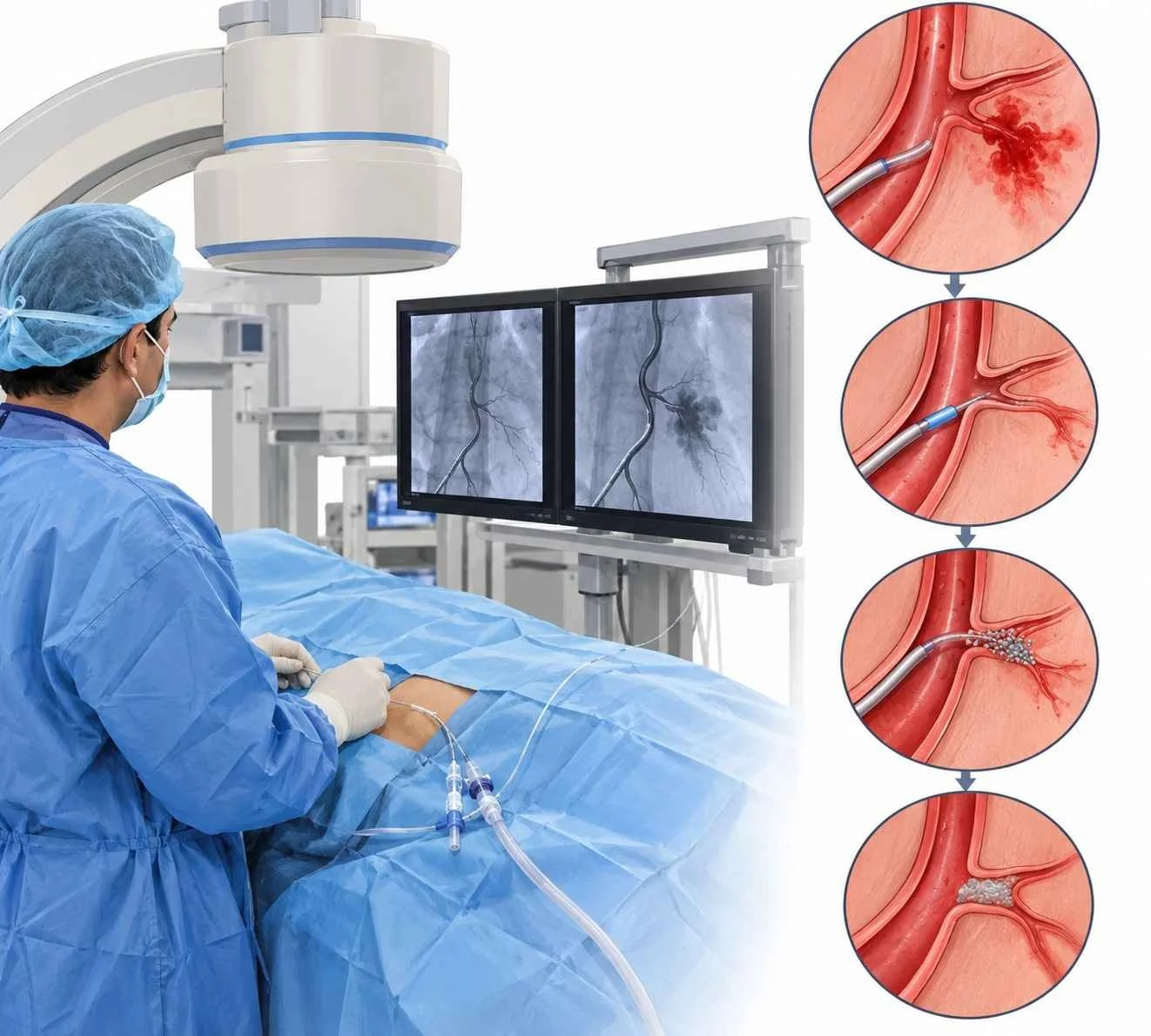
The procedure takes place in an angiography suite. After numbing the puncture site, the radiologist inserts a catheter into an artery. Sedation or general anaesthesia may also be used, depending on the patient's condition.

A small amount of contrast dye helps show the blood vessels on X-ray images. The catheter is carefully guided towards the suspected bleeding point. When the responsible artery is identified, an appropriate embolic material is delivered through the catheter.

The doctor usually takes another angiogram to assess the result before removing the catheter.

How long does it take? There is no fixed answer. One injured vessel may be simpler to treat than bleeding involving several branches. Patients are monitored closely afterwards for any further blood loss or complications.

Book Appointment

Benefits, Risks and Recovery After Bleeding Embolisation

One reason doctors recommend embolisation is that it may control certain bleeding arteries without a large incision. Treating a small branch can sometimes spare surrounding tissue, particularly in the kidney. For selected patients, it may also avoid another operation. Results vary between patients.

Still, embolisation is not risk-free. Bruising at the puncture site, reactions to contrast dye, or injury to a blood vessel can occur. Occasionally, the treatment affects nearby healthy tissue, and bleeding may continue or return.

Recovery depends on how much blood was lost and what caused the problem. A patient treated for a small artery injury may recover sooner than someone admitted with major gastrointestinal bleeding.

Doctors may check haemoglobin, blood pressure, and organ function after treatment. Further scans are sometimes needed. Importantly, embolisation treats the bleeding vessel; an underlying ulcer, infection, or pancreatic condition may still require separate care. Fresh heavy bleeding needs urgent hospital assessment.

Book Appointment
Benefits, Risks and Recovery After Bleeding Embolisation

Bleeding Embolisation Cost in India and Consultation at IRFacilities

How much does bleeding embolisation cost in India? There is no single price that applies to every case. The expense depends on which artery is involved, how many vessels need treatment, and the materials used.

CT angiography, blood tests, hospital admission, blood transfusions, and intensive care can add to the cost. A planned procedure may be easier to estimate than an emergency where additional treatment becomes necessary.

At IRFacilities in Mohali, Dr. Sandeep Sharma offers consultation for patients with vascular conditions that may be suitable for image-guided treatment. Patients from elsewhere in India can enquire about an appointment and share scans and reports for review.

The consultation helps clarify whether embolisation is appropriate, what further tests may be needed, and which treatment options are available.

If someone is vomiting blood, fainting, or experiencing ongoing bleeding, they should go straight to the nearest emergency department instead of travelling for an appointment.

Book Appointment
How Much Does Portal Hypertension Treatment Cost

Why Choose IRFacilities?

Over 20+ years of experience in interventional radiology
Over 10000+ Happy Patients
Expert team
50+ Qualified Doctors
State-of-the-art Equipment
24/7 Emergency Services
20+
Years of Experience
10000+
Happy Patients
95%+
Success Rate
50+
Qualified Doctors

What Our Patients Say

Hear from our patients about their experience with IRFacilities

A

Amit Sharma

"I had a positive experience at IRFacilities for my bleeding embolisation treatment. Dr. Sandeep Sharma and the medical team made me feel comfortable throughout the process. I appreciate the care and attention I received"

Read More
H

Harpreet Singh

"My experience at IRFacilities for bleeding embolisation was good. The medical team handled the procedure professionally and guided me through the treatment process. I am thankful for their support and care."

Read More
R

Rajesh Verma

"I visited IRFacilities for bleeding embolisation treatment with Dr. Sandeep Sharma. The team was supportive, and the procedure and hospital care were handled professionally. I appreciate the attention given to my treatment."

Read More

Frequently Asked Questions

Common questions about Bleeding Embolisation

Can patients from anywhere in India seek a consultation?

Patients from other parts of India who have been diagx`nosed with a vascular bleeding condition can enquire about a specialist consultation at IRFacilities in Mohali.

Dr. Sandeep Sharma evaluates conditions that may benefit from image-guided vascular intervention. A consultation allows the doctor to review the available scans, understand the previous treatment and discuss whether embolisation is appropriate.

Is embolisation better than open surgery?

Neither treatment is automatically better for everyone. Embolisation may avoid a large incision in selected cases, but surgery is sometimes the safer or more effective option. The choice depends on the source of bleeding and the patient's medical condition.

Can bleeding return after embolisation?

Yes, it can. The treated vessel may be successfully blocked, but bleeding can occasionally persist, recur or develop from another source. Some patients need further investigation or another procedure.

Does every patient with internal bleeding need embolisation?

No. Many bleeding conditions are treated with medicines, endoscopy, surgery or observation. Embolisation is considered when the nature and location of the bleeding make catheter-based treatment appropriate.

How do I book a Bleeding Embolisation consultation?

3 simple steps:

Ready to Schedule Your Consultation?

Book your appointment today and take the first step towards expert Bleeding Embolisation

Chat with us
IRFacilities | AI Medical Chatbot

IRFacilities Support 24/7

👋 Welcome to IRFacilities! How can I assist you today?
Just now