You find out during a routine scan. No symptoms. No warning. Just a radiologist's report with words you've never seen before — and suddenly your mind goes to the worst place.
That's how most Thyroid Nodule Treatment stories begin. Not with pain. With a piece of paper.
Here's what that paper usually doesn't say: most nodules are harmless. Most never need surgery. Most people diagnosed today go on to live completely normal lives — some without any treatment at all.
But knowing when to treat, what to choose, and who to trust with the decision? That part matters enormously.
First — What Is a Thyroid Nodule, Actually?
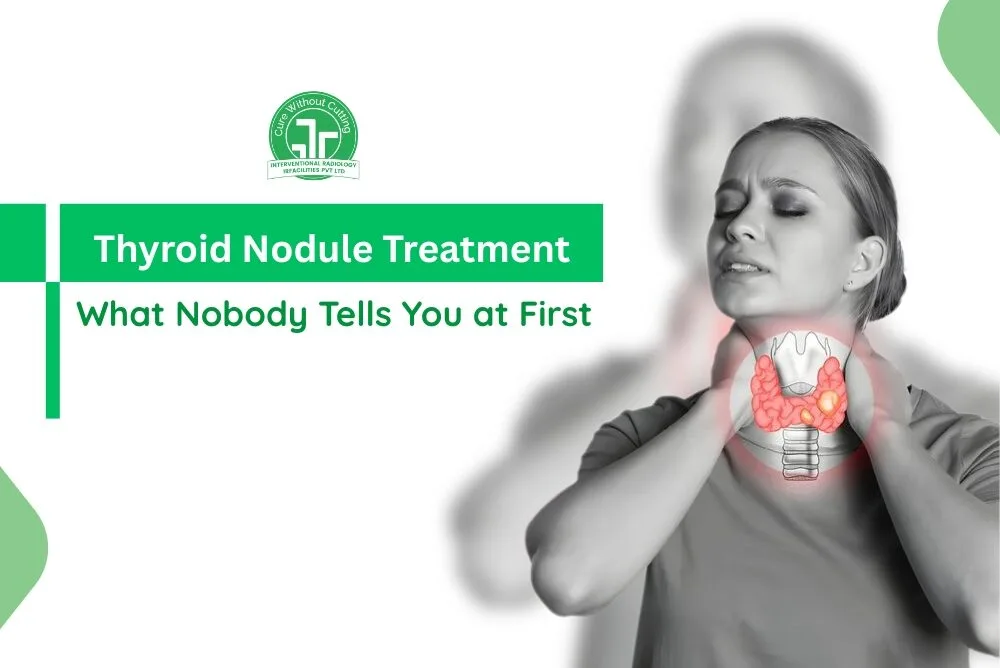
Your thyroid sits low in your neck. Butterfly-shaped. Small but powerful — it controls your metabolism, energy, weight, even your mood.
A nodule is just an abnormal clump of cells that grows inside it. That's all.
They're more common than most people realise. Research shows up to 65% of adults have at least one nodule detectable on ultrasound. Most never cause any symptoms. Most are never even discovered.
The ones that need attention? They usually show up in one of four ways:
- The nodule grows fast
- It starts pressing on your throat or food pipe
- Your thyroid hormone levels go off
- A biopsy flags cells that look unusual
Even then — it's not automatically cancer. It's a signal to look closer. That's a manageable step.
Does Every Nodule Need Treatment?
Honestly, no. And that surprises a lot of people.
For small nodules with no suspicious features and normal hormone levels, the standard recommendation is simply to watch it. Ultrasounds every 12–24 months. A blood test now and then. No drugs. No procedures.
That's not a lazy plan. That's evidence-based medicine.
Treatment becomes necessary when the nodule:
Overproduces hormones: causing racing heart, unexplained weight loss, tremors, or chronic fatigue.
Grows large enough to cause pressure: difficulty swallowing, voice changes, a visible lump in the neck.
Returns a suspicious biopsy: where cells look abnormal and can't be left alone.
Causes enough distress: either cosmetic or psychological — that the patient wants it addressed.
The nodule decides a lot. But so does the patient.
Treatment Options — Without the Medical Jargon
Watch and Wait
For most benign nodules, this is the starting point. Periodic scans. Occasional blood work. Many nodules never grow. Some actually shrink on their own over years.
It's not doing nothing. It's doing the right thing.
Radioactive Iodine
Swallowed as a capsule. Works by selectively destroying overactive thyroid tissue. Used for nodules producing too much hormone, or sometimes after thyroid cancer surgery.
It's outpatient. No incisions. Been used safely for decades.
The catch — it can push thyroid levels too low, requiring lifelong hormone replacement. Not the right fit for every nodule type.
Thermal Ablation — The Biggest Shift in Modern Care
This is where thyroid nodule treatment has genuinely changed in the last decade.
Radiofrequency Ablation (RFA) and Microwave Ablation — both work by delivering heat through a fine needle, directly into the nodule, under real-time ultrasound guidance. The nodule shrinks. No general anaesthesia. No hospital admission. Patients go home the same day.
Studies consistently show 50–90% volume reduction. With a strong safety record.
- It's now the preferred option for:
- Benign nodules causing pressure or visible swelling
- Patients wanting to avoid surgery
- Anyone who needs results without the recovery time
Laser ablation follows the same idea — just uses laser energy instead. Works well for smaller nodules.
Ethanol Injection
For cystic nodules — the fluid-filled kind — this is often the simplest fix.
The cyst is drained. Ethanol is injected into the cavity. The walls collapse. Done in under 30 minutes, outpatient, no theatre required. Recurrence rates are low.
Surgery
Still the gold standard for confirmed thyroid cancer. Also used when a nodule is too large or complex for ablation to handle.
Modern thyroid surgery is safe and well-refined. But it does carry risks — nerve injury, calcium level changes, and usually a lifetime of hormone replacement. That's why most specialists now exhaust minimally invasive options first.
Surgery when it's needed. Not as a reflex
The Specialist You Choose Changes the Outcome
Thyroid nodules sit in complicated medical territory. Endocrinology. Radiology. Surgery. The clinician you see needs to understand all three — not just refer you down a corridor.
At IRFacilities, thyroid nodule patients are assessed with high-resolution ultrasound, guided biopsy when needed, and a clear, individualised plan — not a generic pathway. Dr. Sandeep Sharma brings a minimally invasive-first approach to every case, meaning Thyroid Nodule Treatment is recommended only when it's truly warranted, and the least disruptive option is always considered first.
That distinction matters more than most patients realise — until they've already been through unnecessary surgery.
Questions Worth Asking Before Any Decision
Take these into your next appointment:
- Is there anything suspicious in my ultrasound, or is this likely benign?
- Do I actually need a biopsy right now?
- Am I a candidate for thermal ablation instead of surgery?
- What happens if I choose to monitor instead of treat?
- Will this affect my thyroid function long-term?
If the answers feel rushed or vague — get a second opinion. You're entitled to one.
What This Really Comes Down To
A nodule on a scan is not a diagnosis of something terrible. It's information. And information — handled properly — is something you can work with.
Modern thyroid nodule treatment has moved far beyond the binary of "surgery or nothing." Thermal ablation, ethanol injection, radioactive iodine — the options are real, the results are proven, and for most patients, the path forward is far less frightening than the initial discovery.
Find the right Thyroid Nodule Treatment specialist. Ask the right questions. Make a decision that's built around your nodule — not someone else's protocol.
That's where good outcomes begin.
Ready to Discuss?
Share your symptoms and reports with our team. We help you understand whether you need treatment now or simple lifestyle changes and follow‑up.