Non-Surgical Spine Pain Treatment in Mohali: When You Can Avoid Surgery Altogether
When someone has back pain for weeks or months, one question usually comes up sooner or later: “Will I need surgery?”
Not necessarily.
Back pain can happen for many different reasons. Sometimes it settles with medicines, rest, physiotherapy and a few changes in daily habits. In other cases, the pain may be coming from a disc or an irritated nerve and may need more specific treatment.
So before you thinking about surgery, it is important to know what is actually causing the pain. A proper examination and, when needed, imaging can help a doctor decide what treatment makes sense.
Back Pain: An Overview
Back pain can start suddenly or build up slowly. You may notice it after lifting something, travelling for a long time, spending the whole day at a desk or doing more physical work than usual.
For some people, the pain disappears within a few days. For others, it keeps coming back.
Lower back pain is particularly common. It can sometimes remain in one area, while in other cases it may travel towards the hip, buttock or leg. That difference can give a doctor useful information about what might be happening.
And no, having a spine problem does not automatically mean that an operation is required.
The treatment depends on the actual cause, how severe the symptoms are and whether there is any nerve involvement.
Causes of Back Pain
There are quite a few reasons why your back may hurt. Some are relatively simple, while others need a closer look.
Common causes include:
- Muscle strain
- Poor posture
- Sitting for long hours
- Lifting heavy objects
- Sports or other injuries
- Herniated or slipped disc
- Nerve irritation or compression
- Sciatica
- Spinal stenosis
- Changes in the joints of the spine
- Age-related changes in the discs
For example, someone who spends eight or nine hours sitting at a computer may develop back discomfort because of poor posture and lack of movement.
On the other hand, pain that starts in the lower back and travels down the leg can sometimes be related to irritation of a nerve.
That is why treating every type of back pain in exactly the same way isn't a good idea.
Symptoms of Back Pain
Back pain can feel different depending on what is causing it.
Some people describe it as a dull, continuous ache. Others feel a sharp pain when they sit or stand up. If a nerve is involved, there may also be tingling, numbness or pain going down the leg.
Some common symptoms include:
- Pain in the lower or upper back
- Stiffness after waking up
- Pain after sitting for a long time
- Difficulty bending or turning
- Pain spreading to the buttock or leg
- Tingling or numbness
- Burning or shooting pain
- Difficulty standing or walking for long periods
- Weakness in the leg
If you have saffer pain after an accident or develop significant weakness, loss of bladder or bowel control, you need medical attention immedetly.
Non-Surgical Treatments for Back Pain
The first treatment for back pain is not always a procedure.
Depending on the problem, a doctor may suggest medicines, physiotherapy, exercises, posture correction or changes to daily activities. Some people simply need time and the right kind of movement to get better.
But what if the pain continues?
That's when a more detailed evaluation may be needed.
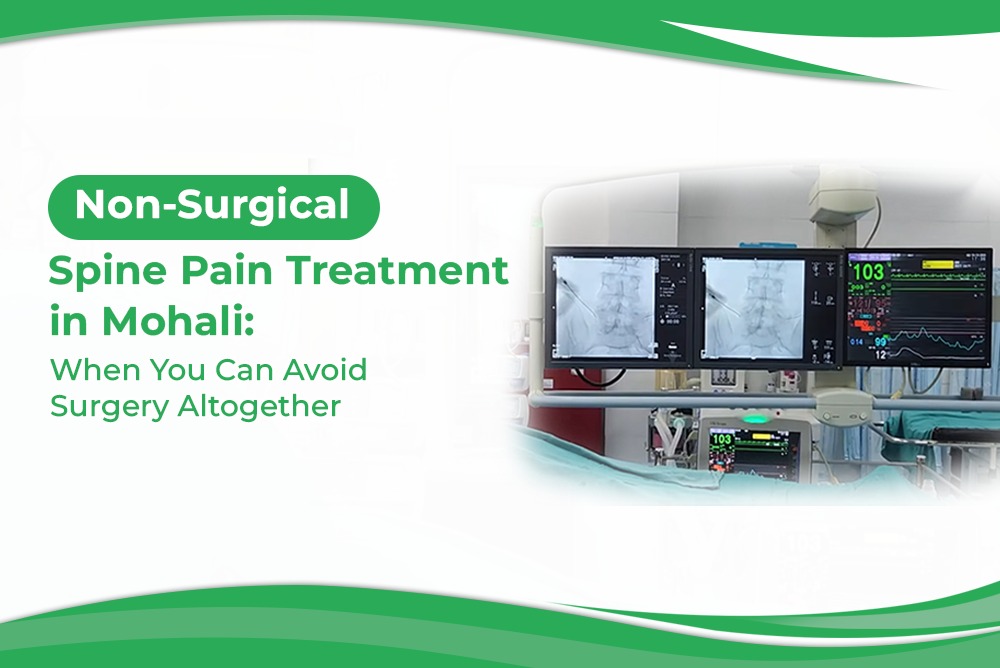
For certain patients, a minimally invasive spine procedure may be considered. These procedures are different from traditional open surgery. The doctor uses imaging guidance to reach a particular area of the spine and deliver treatment where it is needed.
For example, some nerve-related pain may be treated with an image-guided injection around the affected nerve. Whether this is appropriate depends on the diagnosis and the patient's individual situation.
The important thing is not to assume that a particular procedure will work for everyone. The source of the pain needs to be identified first.
Why Choose IRFacilities and Dr. Sandeep Sharma?
When back pain doesn't settle, most patients want two things: to understand what is causing it and to know whether they really need surgery.
This is where a proper consultation becomes important.
At IRFacilities, Dr. Sandeep Sharma provides evaluation and interventional treatment options for selected spine-related conditions. The treatment approach can vary from one patient to another because back pain itself can have many different causes.
The focus is on assessing the patient's symptoms and available imaging before deciding what type of treatment may be suitable.
Minimally Invasive Approach
Some spine problems can now be treated through a tiny opening instead of a big cut. Since the surgeon doesn't need to move as much tissue out of the way, the muscles and structures around your spine are disturbed less than they would be in traditional open surgery.
Patient Comfort
For appropriate procedures, local anaesthesia with sedation may be used. The exact approach depends on the procedure and the patient's medical condition.
Recovery
One reason some patients consider minimally invasive treatment is the possibility of a shorter recovery compared with major surgery. Still, recovery isn't the same for everyone. It depends on the underlying condition and the treatment performed.
Treatment Based on the Patient
A person with a disc problem may not need the same treatment as someone with another cause of back pain. Dr. Sandeep Sharma and the IRFacilities team can assess the individual case before discussing available options.
Can You Avoid Spine Surgery?
Sometimes, yes.
Some patients with back or nerve-related pain can be managed without traditional surgery. Medicines, physiotherapy, lifestyle changes and, in selected cases, minimally invasive procedures may be considered.
But avoiding surgery should not become the only goal.
There are situations where surgery may be the appropriate treatment. If there is serious or progressive nerve compression, significant weakness or another condition requiring surgical treatment, delaying care may create additional problems.
So the better question is not simply, “How can I avoid surgery?”
It is:
“What is causing my back pain, and what treatment is appropriate for my condition?”
That answer can only come after proper medical assessment.
When Should You See a Specialist?
If your back pain has continued for several weeks, keeps returning or is making everyday activities difficult, don't keep ignoring it.
It is particularly worth getting checked if you have pain travelling into your leg, persistent numbness, tingling or weakness.
A specialist can review your symptoms and, where necessary, imaging such as an MRI to understand what may be behind the pain.
Final Thoughts
Living with back pain is exhausting, especially when it starts affecting your job, your sleep, or the things you normally enjoy. The good news is that a spine diagnosis doesn't always mean you'll need a big operation.
For some patients, non-surgical treatment or a minimally invasive spine procedure may be an option.
Ready to Discuss?
Share your symptoms and reports with our team. We help you understand whether you need treatment now or simple lifestyle changes and follow‑up.