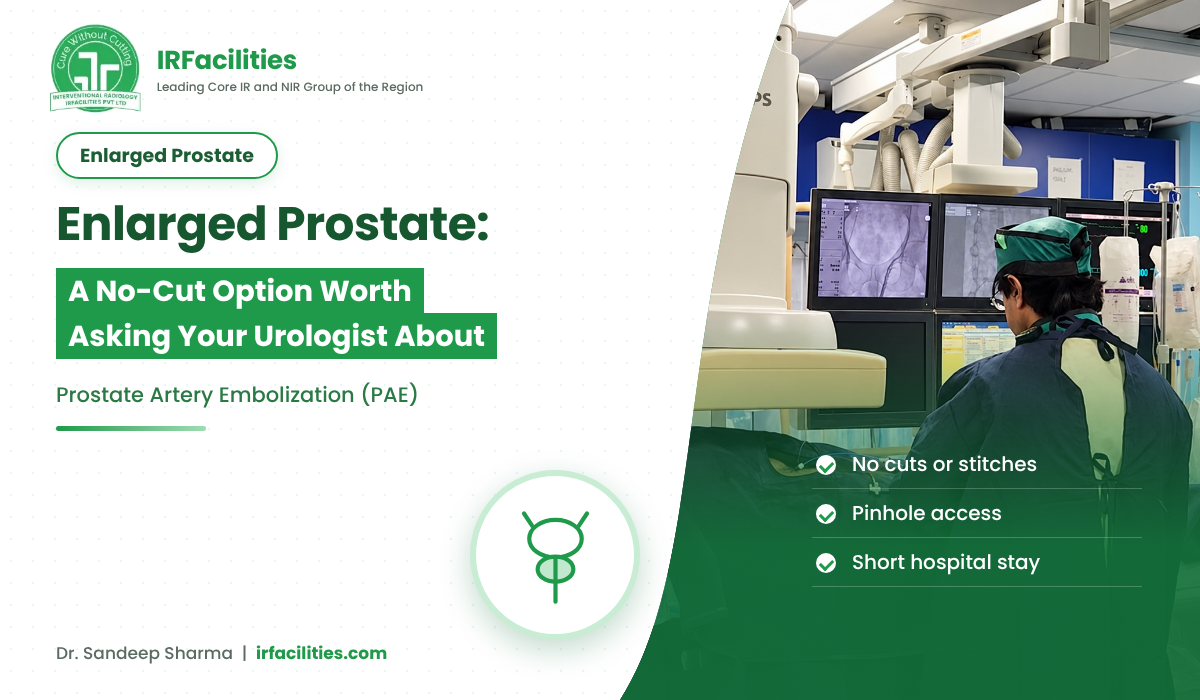
Enlarged Prostate? A No-Cut Option Worth Asking About
Most men over 55 how they slept last night, and you might hear: "Got up three times again.
It's so common that many simply accept it as part of getting older. The weak stream. Standing at the toilet longer than you'd like. Feeling that the bladder never quite empties. Planning car journeys around where the next washroom is.
These are classic signs of an enlarged prostate, which doctors call BPH (benign prostatic hyperplasia). It isn't cancer, but it can wear down your quality of life in a quiet, steady way.
The usual path, and where it stalls
Treatment usually starts with tablets. For many men, they help. For others, the relief fades, or the side effects (dizziness, problems with ejaculation) become hard to live with.
The next step offered is often surgery through the urine passage, like TURP. It works well, but some men are worried about the hospital stay, a catheter, the risk to sexual function, or are simply not fit enough for anaesthesia.
That's the gap where prostate artery embolisation (PAE) comes in.
What PAE actually involves
PAE doesn't touch the urine passage at all.
The interventional radiologist makes a small puncture in the wrist or groin. A fine tube travels through the arteries, guided by X-ray, until it reaches the small arteries that feed the prostate. Microscopic particles are placed there to reduce the blood flow. Over the next weeks, the prostate softens and shrinks, and pressure on the urine passage eases.
What men usually want to know:
- No cut, no stitches. Just a small puncture that heals on its own.
- Usually local anaesthesia, not general.
- Most go home the same day or next morning.
- Studies so far suggest the risk to erection and ejaculation is low, which matters a lot to many patients.
Who might benefit
PAE is worth discussing if:
- Tablets aren't working well enough, or the side effects bother you
- You'd like to avoid or delay surgery
- You have a large prostate
- Other health conditions make anaesthesia or surgery riskier
- You have a catheter because of prostate blockage and want to try to get free of it
It may not suit everyone. Very narrow, twisted arteries (common with age and diabetes), certain bladder problems or a suspicion of prostate cancer can change the plan. A PSA test, an ultrasound and often a CT angiogram help decide.
What the recovery looks like
For a few days you may feel a burning sensation while passing urine, go more often, or feel mild discomfort in the pelvis. These usually settle on their own with simple medicines. Improvement in the urine flow tends to build gradually over a few weeks rather than overnight.
Working with your urologist, not against them
PAE isn't about replacing your urologist. The best decisions come when the urologist and interventional radiologist look at your case together. If you already have a urologist you trust, bring your reports and we're happy to coordinate with them.
PAE in Gurugram and Mohali
IR Facilities offers prostate artery embolisation at:
- Gurugram: near Manipal Hospital, Sector 23A, for Gurugram, Delhi and the NCR
- Mohali: 3rd floor, Shivalik Hospital, Sector 69, for Mohali, Chandigarh, Panchkula and Zirakpur
Bring your PSA report, any ultrasound, and the list of medicines you're taking. If you've been told surgery is the next step, it's worth one conversation to know all your options before you decide.
Call +91-86999 77915 to book a consultation.
Ready to Discuss?
Share your symptoms and reports with our team. We help you understand whether you need treatment now or simple lifestyle changes and follow‑up.