
Liver Abscess: Symptoms, Causes And Treatment Explained
Liver abscess is not something most of us have contemplated till we came across someone who had one. But the good news is that with modern treatment it is very well-managed. Let’s understand more about this condition. What causes it? How do we know we have it? What are the treatment options available today?
Liver Abscess: What it really is?
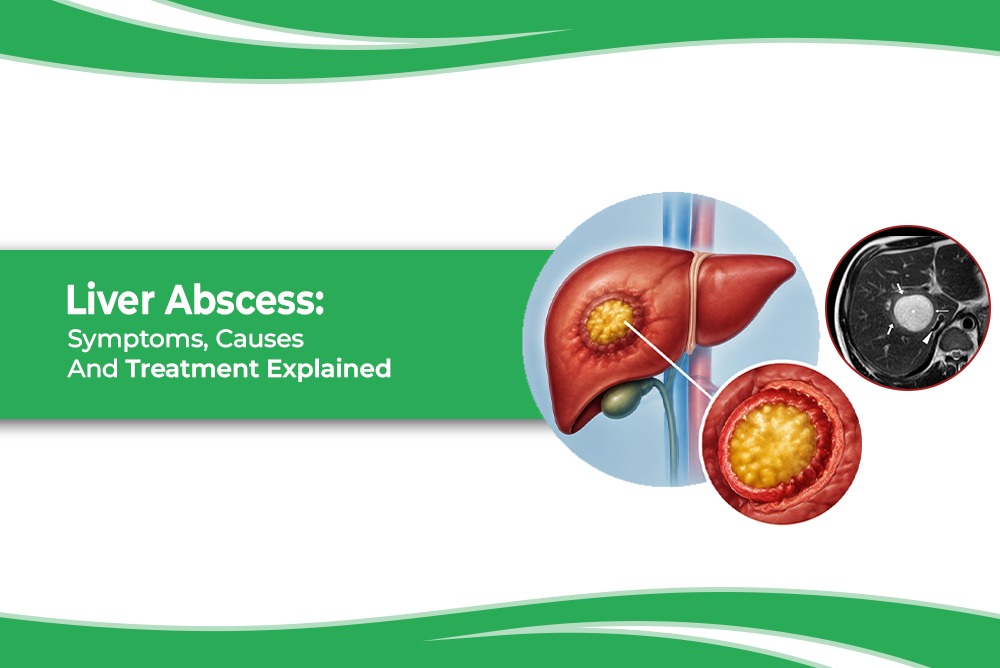
Liver is the largest organ in the human body. It performs a multitude of metabolic functions. It detoxifies the body, produces bile and plays a part in digestion and metabolism. Liver infections and diseases are not uncommon. One of these is a liver abscess. Inflammation of the liver can be caused by bacteria or parasites. The body tries to protect itself by isolating the infection. The collection of pus thus formed is called an abscess.
There are two major types of liver abscess:
- Pyogenic abscess: These are caused by bacteria, and are common in the western world
- Amoebic abscess: These are caused by a parasite called Entamoeba histolytica and are commonly found across India due to contaminated food and water
Liver abscess: What causes it?
There are several causes of liver abscess:
- Infections that originate in the gall bladder or nearby organs sometimes spread to the liver via the bile ducts. There are instances of bacteria multiplying within the bile ducts when there is a blockage, for instance due to a gallstone.
- Infections elsewhere in the body can also spread to the liver through the blood stream. Sometimes, infection spreads directly from the bile ducts or gall bladder.
- Ingestion of food or water contaminated with the parasite Entamoeba histolytica can cause an amoebic liver abscess.
- People with diabetes, liver disease and suppressed immune systems are at higher risk of developing liver abscess. So are those who have had abdominal surgery recently. Liver abscesses can also be triggered by an abdominal injury.
Liver abscess: What are the symptoms?
Symptoms of liver abscess usually begin to appear 4 to 6 weeks after infection and are similar to flu-like symptoms. In some cases it may resemble a stomach infection or hepatitis. The most common symptoms of abscess are:
- Persistent fever, sometimes with chills or night sweats
- Upper right side abdominal pain that can radiate to the shoulder
- Nausea and vomiting
- Loss of appetite and weight loss
- Fatigue
- Jaundice if the infection progresses
If you have a persistent high grade fever and upper right abdominal pain, you should get yourself examined as it could be a liver abscess. Left untreated, a liver abscess may rupture and cause dangerous complications like sepsis.
Liver abscess: Diagnostic tests
Initial blood tests will be conducted to look for signs of infection and liver dysfunction. Imaging tests such as an ultrasound or CT scan are used to confirm the diagnosis and identify the size and location of the abscess. Sometimes, stool tests are also done to check for amoebic infection.
Liver abscess: Treatment and recovery
<>1. Treatment for liver abscess depends on the severity and type of infection. For small abscesses, medication may be sufficient to treat the condition. Antibiotics are prescribed for bacterial infections while anti-parasitic drugs are administered for an amoebic infection.2. However, if the abscess is larger than 3-5 cm or is unresponsive to medication or is at risk of rupturing, a procedure to drain the pus may be necessary. A specialist known as an interventional radiologist performs this procedure. Surgery may be required in complex cases.
3. The procedure involved in draining a liver abscess is called percutaneous catheter drainage. It involves making a small incision through which a catheter is inserted into the liver. With the guidance of an ultrasound or CT scan, the catheter is guided into the abscess to drain the fluid. This technique is minimally invasive and causes less discomfort to the patient than open surgery. Patients who undergo this procedure usually require a course of antibiotics in addition to the drainage.
4. Sometimes, only a single needle aspiration of the abscess may be sufficient to treat it depending on the size and nature of the infection.
5. Open surgery to remove the pus is only considered in complicated cases involving multiple abscesses, thick pus that cannot be removed by suction, or if the abscess has already ruptured.
Liver abscess: How to get treated in Chandigarh or Mohali?
Patients in the tricity have access to advanced image-guided treatments for liver abscess. Liver abscess drainage treatment in Chandigarh and liver abscess drainage in Mohali are now performed using image-guided techniques to remove the infected fluid.
Dr. Sandeep Sharma and the team of Interventional Radiologists at IR Diagnostics have the expertise and equipment to treat liver abscesses. Using image guidance, the doctors are able to perform catheter drainage of a liver abscess, thereby avoiding open surgery. Most patients report faster recovery and less discomfort with this procedure.
Liver abscess: What to expect during recovery?
With early diagnosis and proper treatment, liver abscesses respond well to treatment. Medication alone or in conjunction with drainage and antibiotics usually suffice to treat a liver abscess. Patients begin to feel better within a few weeks of the commencement of treatment. A follow up scan is usually conducted to ensure that the abscess has been cleared completely before the patient is declared cured.
Frequently Asked Questions
1. What's the difference between a pyogenic and an amoebic liver abscess?A pyogenic abscess is caused by bacteria and is more common in the western world, while an amoebic abscess is caused by the parasite Entamoeba histolytica, commonly found across India due to contaminated food and water.
2. How soon do symptoms of a liver abscess appear after infection?Symptoms usually begin to appear 4 to 6 weeks after infection and often resemble flu-like symptoms, or sometimes a stomach infection or hepatitis, which can make early diagnosis tricky.
3. Is draining a liver abscess a major surgery?Not usually. The standard procedure is percutaneous catheter drainage, where a small incision allows a catheter to be guided into the abscess under ultrasound or CT guidance to drain the fluid. This minimally invasive technique causes less discomfort than open surgery, which is only considered in complicated cases involving multiple abscesses, thick pus, or a rupture.
4. What tests are used to diagnose a liver abscess?Doctors typically start with blood tests to check for signs of infection and liver dysfunction, followed by imaging tests like an ultrasound or CT scan to confirm the diagnosis and pinpoint the size and location of the abscess. Stool tests may also be done if an amoebic infection is suspected.
5. Where can I get liver abscess drainage treatment in Chandigarh or Mohali?Patients in the tricity have access to advanced image-guided treatment for liver abscess. Dr. Sandeep Sharma and the team of Interventional Radiologists at IR Diagnostics provide liver abscess drainage treatment in Chandigarh and liver abscess drainage in Mohali, using image guidance to perform catheter drainage and help patients avoid open surgery.
Ready to Discuss?
Share your symptoms and reports with our team. We help you understand whether you need treatment now or simple lifestyle changes and follow‑up.