
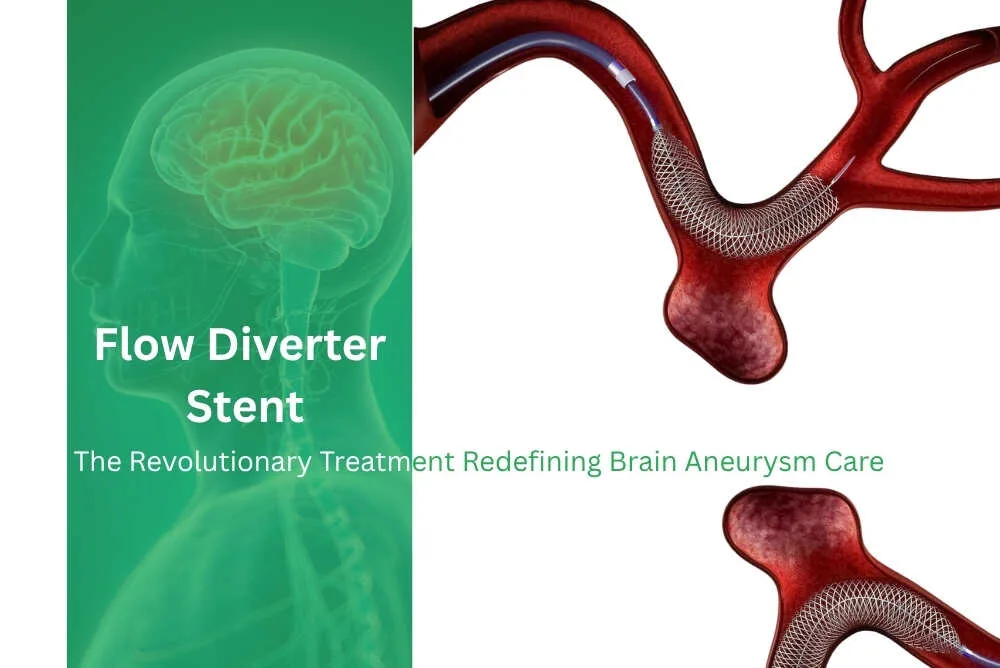
Flow Diverter Stent: The Revolutionary Treatment Redefining Brain Aneurysm Care
Brain aneurysms pose a silent threat. Millions of people are living with bulging, weak blood vessels in their brains and are completely unaware of it until something happens to cause harm. For a long time, treating complicated aneurysms involved the use of open surgical procedures or coiling that had significant limitations. The world of medicine has evolved. It is now possible to flow diverter stent, which is now among the top revolutionary developments in the field of neurovascular medicine. It provides patients with an improved, safer route to recovery.
At IRFacilities, under the guidance of Dr. Sandeep Sharma, we have seen firsthand how one device has changed the outcomes of patients with limited alternatives.
What Exactly Is a Flow Diverter Stent?
The flow diverter stent is a cylindrical mesh-like device that is placed inside the parent artery, the blood vessel carrying the aneurysm. Contrary to conventional coiling that fills the sac of an aneurysm through the body, the sac, the flow diverter stent is different and more efficient. It directs flows of blood away from the decreasing pressure inside the sac, allowing the body to heal itself as time passes.
The mesh is strong enough to break up the blood flow patterns that are abnormally that feed the aneurysm but wide enough to allow for the flow of blood into smaller branch vessels nearby. This results in gradual, natural sealing of the aneurysm with no surgical intervention.
This isn't just an exercise. It's biological engineering that works in synergy in harmony with human bodies.
Why Traditional Methods Had Limitations
Prior to the introduction of the stent that diverts flow, neurovascular specialists mostly used endovascular coiling or surgical clipping. Both techniques have their own challenges. Surgery requires opening the skull - it is a significant procedure that has a substantial risk and recovery time. Coiling, though relatively minimally invasive, is most effective for smaller round aneurysms. Large or wide-necked aneurysms, the most hazardous type, are often difficult to treat using coils by themselves. The rate of recurrence was higher, repeated procedures are often necessary.
The flow diverter stent is able to fill this space. It was designed specifically for massive, huge, and fusiform aneurysms, which were previously treated with no solution. Patients who were previously rejected or advised to "watch and wait" now have a permanent, real solution.
Who Is the Right Candidate?
Many aneurysms do not require a stent that diverts the flow in all cases, but for the appropriate patient, it can transform the situation. The most suitable candidates are:
- Patients suffering from large or massive aneurysms (over 10mm in diameter)
- Patients who suffer from large-necked aneurysms, for which coiling isn't effective
- Patients who have had inadequate treatment through previous coiling
- Individuals suffering from Fusiform Aneurysms with a lengthy segment of artery
- The surgical clipping procedure is an excessive risk
Within IRFacilities, Dr. Sandeep Sharma personally evaluates every patient's anatomy, imaging, and medical history prior to making any recommendations for intervention. The objective is not for a patient to undergo a surgical procedure; the objective is to provide the appropriate procedure.
The Procedure: What to Expect
The insertion of a stent for flow diverter is carried out under general anesthesia using an endovascular approach that is minimally invasive. A thin catheter is inserted through an artery located in the groin and then to the targeted vessel within the brain. The stent is then carefully placed over the neck of the aneurysm.
The whole process typically takes up to three hours. Most patients are able to walk within 24 hours and are discharged in a matter of days. Compare this with the months of recovery required for open-brain surgery. The contrast is astonishing.
Patients are typically given two antiplatelet therapies (medications to stop the stent from clotting) for a period of time following the procedure. Regular follow-up imaging checks the progress of closure of the aneurysm, which usually takes six to 12 months.
The Results Speak for Themselves
Clinical evidence shows that this flow diverter stent can achieve complete occlusion of an aneurysm with a high percentage of cases in just one year. For complicated aneurysms that had previously had high recurrence and rupture risks, the figures make a remarkable leap ahead.
Patients who are treated with Dr. Sandeep Sharma report not only good outcomes but also a positive return to their normal lives quicker and with less trauma and with more confidence for long-term protection.
Your Brain Health Deserves the Best
An aneurysm in the brain can be terrifying. However, it doesn't have to dictate your future. With the right expert, the right equipment, and the appropriate facility, outstanding results are possible.
The flow diverter stent is proof that medical technology continues to advance to benefit patients—less injurious, more precise, and more efficient than before.
At IRFacilities, Dr. Sandeep Sharma brings world-class neurovascular expertise directly to patients who require it the most. In the event that you or someone else you love is suffering from an atypical brain aneurysm, now is the perfect time to look into the options.
Your brain is a treasure. You can trust it to people who know the importance of that.
Ready to Discuss?
Share your symptoms and reports with our team. We help you understand whether you need treatment now or simple lifestyle changes and follow‑up.