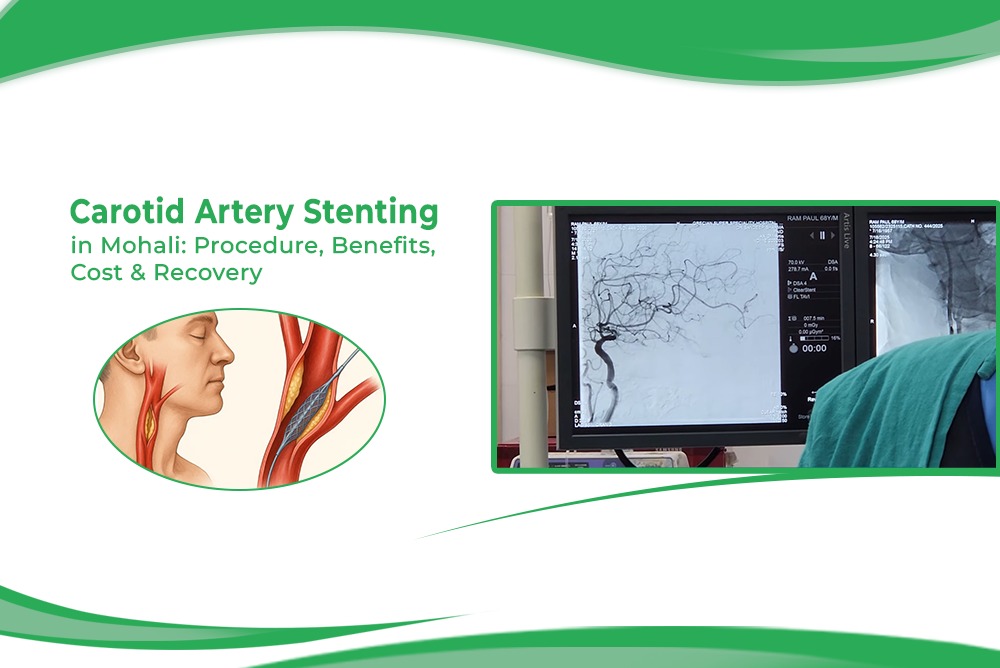
Carotid Artery Stenting: A Minimally Invasive Treatment for Carotid Artery Blockage
A healthy flow of blood to the brain is essential for maintaining normal brain function. When the carotid arteries become narrowed because of plaque buildup, the risk of a stroke can increase. Carotid artery stenting is a minimally invasive procedure that can help restore blood flow through a narrowed carotid artery and reduce the risk associated with significant carotid artery disease in appropriately selected patients.
At IR Facilities, under the care of Dr. Sandeep Sharma, patients can receive image-guided, minimally invasive vascular care tailored to their individual condition.
What Are the Carotid Arteries?
The carotid arteries are major blood vessels located on either side of the neck. They carry oxygen-rich blood from the heart to the brain.
Over time, fatty deposits called plaque can accumulate inside these arteries. This condition, known as carotid artery stenosis, can narrow the artery and interfere with normal blood flow.
If plaque breaks loose or the narrowing significantly affects blood flow, it may contribute to a transient ischemic attack (TIA) or stroke.
What Is Carotid Artery Stenting?
Carotid artery stenting is a minimally invasive procedure used to widen a narrowed carotid artery.
During the procedure, an interventional specialist guides a thin catheter through a blood vessel—often from the groin or wrist—toward the affected carotid artery. A small balloon may be used to widen the narrowed area, and a stent, a small mesh tube, is placed to help keep the artery open.
Modern carotid interventions may also incorporate techniques designed to reduce the risk of plaque or debris travelling toward the brain during the procedure.
Who May Need Carotid Artery Stenting?
Carotid artery stenting is not necessary for everyone with carotid artery narrowing. The appropriate treatment depends on several factors, including:
- The degree of carotid artery narrowing
- Whether the patient has experienced symptoms such as TIA or stroke
- Overall health and medical history
- The anatomy of the carotid arteries
- Previous vascular procedures or surgery
- The patient's individual risk profile
A detailed evaluation and appropriate imaging are important before deciding whether stenting is suitable.
How Is the Procedure Performed?
Carotid artery stenting is generally performed using image guidance and local anesthesia, although the exact approach varies from patient to patient.
The typical steps include:
- Vascular access: A small puncture is made in an appropriate blood vessel.
- Catheter guidance: A thin catheter is carefully guided to the narrowed carotid artery using real-time imaging.
- Protection and treatment: Appropriate protection measures may be used to reduce the chance of debris reaching the brain.
- Balloon angioplasty: In selected cases, a balloon is gently inflated to widen the narrowed segment.
- Stent placement: A stent is positioned across the narrowing to help maintain the artery's opening.
- Final assessment: Imaging is performed to confirm blood flow through the treated artery.
- Recovery: The patient is monitored after the procedure according to their individual clinical needs.
Benefits of Carotid Artery Stenting
For appropriately selected patients, carotid artery stenting can offer several potential advantages:
- Minimally invasive treatment
- No large surgical incision in the neck
- Treatment through a small vascular access site
- Potentially shorter recovery compared with some surgical approaches
- Restoration or improvement of blood flow through the narrowed artery
The benefits and risks vary between individuals, so treatment decisions should be made after consultation with a qualified vascular or interventional specialist.
Carotid Artery Stenting vs. Carotid Endarterectomy
Another established treatment for significant carotid artery disease is carotid endarterectomy, a surgical procedure in which plaque is removed directly from the artery.
Carotid artery stenting and carotid endarterectomy are different procedures, and neither is automatically appropriate for every patient. The choice may depend on the severity and symptoms of the disease, age, anatomy, previous procedures, medical conditions, and the expertise available.
A specialist can evaluate these factors and discuss the most appropriate treatment options.
What Happens After Carotid Artery Stenting?
After the procedure, patients are monitored for potential complications and may undergo follow-up imaging to assess the treated artery.
Doctors may also recommend medications, particularly antiplatelet therapy, as well as management of risk factors such as:
- High blood pressure
- High cholesterol
- Diabetes
- Smoking
- Physical inactivity
- Unhealthy diet
Long-term management is important because treating one narrowed artery does not eliminate the underlying risk factors for vascular disease.
When Should You Seek Medical Attention?
Sudden neurological symptoms can be a medical emergency. Seek immediate emergency medical care if you experience symptoms such as:
- Sudden weakness or numbness, especially on one side of the body
- Sudden difficulty speaking or understanding speech
- Sudden loss or disturbance of vision
- Sudden dizziness, loss of balance, or difficulty walking
- Sudden severe neurological symptoms
Even if these symptoms disappear after a short time, they may represent a transient ischemic attack (TIA) and require urgent medical assessment.
Expert Image-Guided Vascular Care at IR Facilities
Carotid artery disease requires careful evaluation and individualized treatment planning. At IR Facilities, Dr. Sandeep Sharma provides image-guided interventional care with an emphasis on minimally invasive treatment options where appropriate.
If you or a family member has been diagnosed with carotid artery narrowing, discuss your condition with a qualified specialist to understand the available treatment options and their potential benefits and risks.
Conclusion
Carotid artery stenting is an important minimally invasive treatment option for selected patients with carotid artery stenosis. With appropriate patient selection, modern imaging, careful procedural technique, and proper follow-up, it can play an important role in the management of carotid artery disease.
Ready to Discuss?
Share your symptoms and reports with our team. We help you understand whether you need treatment now or simple lifestyle changes and follow‑up.