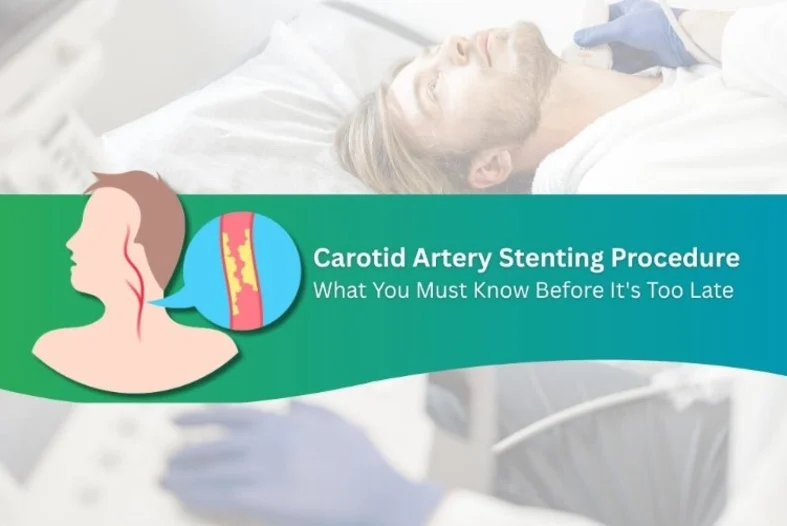
Carotid Artery Stenting Procedure: What You Must Know Before It's Too Late
Every year, a plethora of strokes take place in silence. This isn't because treatments weren't available, but rather because people simply didn't think they had an option.
If your doctor has mentioned neck vessels which are blocked or with an increased risk of having a stroke, knowing the carotid artery stenting process could be one of the most vital actions you'll take.
What Is the Carotid Artery—and Why Should You Care?
The carotid arteries of your neck extend along both sides your neck. Their purpose? to deliver oxygen-rich blood directly to your brain every single day.
If the arteries narrow because of plaque accumulation, the problem is called carotid artery narrowing or stenosis. It's a lot more risky than many people think.
The most terrifying aspect is that carotid arterial diseases are the cause of 20%-30 percent of all strokes that are Ischemic. Many sufferers, however, experience no symptoms until the stroke or mini-stroke (TIA) is suddenly experienced.
Early detection of issues and timely treatment with the carotid artery-stenting procedure may improve your overall health. This isn't a joke.
How Does the Carotid Artery Stenting Procedure Actually Work?
The procedure of carotid artery stenting (CAS) is described as a minimally-invasive catheter-based procedure. It allows carotid vessels to be opened without the necessity of neck surgery open, and also without the need for a lot of cuts and long hospitalizations.
Here's the entire process broken down into simple steps:Step 1: Imaging - The first Advanced scans, such as carotid Doppler ultrasound or CT angiograms map precisely the location as well as intensity of the blockage prior to when anything starts.
Step 2: A Tiny Entrance Point - The doctor performs a small punctureusually located in your groin. A small, flexible catheter is passed through your arteries and then up to the neck. No neck incision required.
Step 3: Brain Protection is In - A tiny filter referred to as Embolic Protection Device is positioned just above the obstruction. It collects any debris that may get loose during the procedure to ensure your brain is secure.
Step 4: Balloon opens the artery - A balloon of a small size is slowly inflated in the narrowed portion. This opens the artery and opens up the space for the flow of blood to be restored in a healthy way.
Step 5: The Stent is Placed - The self-expanding stent is placed at the location. It keeps the artery open for lifeas a scaffolding system inside the vessel.
Step 5: Quick Recovery - The majority of patients are observed for less than 24 hours. Most patients go home the following day. The recovery process is much quicker than traditional carotid surgery.
Are You a Candidate? Here's Who Typically Qualifies
The carotid artery stenting procedure isn't for everyone. It is, however, strongly advised when:- You've had an TIA or a mild stroke (symptomatic stenosis)
- Your artery is over 70 percent blocked
- The risk of open surgery is high from heart problems, advanced age or previous neck surgery
- Both carotid arteries are affected. the need for staged treatment is essential.
A thorough evaluation is vital prior to making any decision. An individualized assessment is the cornerstone of safe, effective treatment.
Why Expert Care Makes All the Difference
This procedure requires precision. It requires the most advanced imaging technology, expertly trained hands, and a suitable medical environment. There are many facilities that are not equipped to handle complicated carotid cases.
The IRFacilities Patients are able to access the latest interventional radiology facilities and the dedicated group of stroke-prevention specialists. Led by Dr. Sandeep Sharma—a highly regarded interventional specialist with a wealth of expertise in vascular medicine The team brings the highest level of technical expertise and genuine care to each case.
Dr. Sandeep Sharma believes in one fundamental principle: the right treatment for the patient at the appropriate moment. Every case at IRFacilities is handled with that goal in mind.
Stenting vs. Surgery -- Which One Is Right for You?
Both are beneficial. The best choice is based on your individual health needs.
| Factor | Carotid Stenting (CAS) | Carotid Surgery (CEA) |
|---|---|---|
| Invasiveness | Minimally invasive | Open surgery |
| Recovery Time | 1 to 2 days | 7 to 10 days |
| Anaesthesia | Local | General |
| Best For | High-risk surgical patients | Standard surgical candidates |
| Visible Scar | None | Neck incision |
Your care team will go over each option in detail without any pressure and in complete transparency prior to you making any choice.
What Happens After the Procedure?
A majority of patients see an increase in blood flow within only a few minutes. But long-term success is dependent on a regular and thorough monitoring:
- Use your medication antiplatelet medications such as aspirin and clopidogrel, as recommended
- Change your lifestyle stop smoking, eat healthy and stay active
- Follow-up scans are scheduled to check the health of the stent and artery condition
- Control your numbers (blood cholesterol and blood pressure need constant focus)
The goal isn't just preventing strokes. It's about giving you back your confidence and your peace of mind.
Don't Wait for a Warning Sign That Comes Too Late
A blocked carotid vein seldom announces itself. In the event that it does, valuable time could already be gone.
If you're a risk factor like diabetes, high blood pressure or a history of smoking or the family history of stroke an easy carotid test could be the turning point in your life.
Talk to a qualified specialist. Be sure to ask the appropriate questions. Take control of your cardiovascular health, as long as you have all options available to you.
Your brain is valuable and deserves protection. Be prepared before a crisis takes your hand.
Ready to Discuss?
Share your symptoms and reports with our team. We help you understand whether you need treatment now or simple lifestyle changes and follow‑up.