The sudden cough followed by bloody saliva can range from streaks to a bucketload of blood gushing from the lung scenario that could send anyone into panic mode. Though a little less terrifying than looking like a real-life horror movie, hemoptysis can be fatal. Minor episodes may not hold great significance in medicine. At the same time, a catastrophic situation of massive hemoptysis, defined as the expectoration of blood more than 100-600 ml within 24 hours,s can trigger death by asphyxiation unless treated promptly.
A bronchial artery embolization (BAE) is one of the quickest and life-saving modalities for controlling life-threatening bleeding from a lung. This minimally invasive treatment within a short time saves lives from further complications, even without resorting to open-chest surgery. Let us go through the work of this.
What Causes Lung Bleeding (Hemoptysis)?
They can rupture due to various reasons (traumatic causes or pathological conditions), leading to bleeding in the lungs:
- Tuberculosis (TB): This infection damages the lungs and weakens blood vessels to bleed.
- Bronchiectasis: where the airways become damaged and enlarged.
- Lung infections: bacteria, fungal, viral can cause bleeding
- Lung cancer: Tumors in the lungs can destroy the blood vessels, causing them to bleed.
- Chronic bronchitis: Long-term Inflammation in the airways, often seen in smokers, can lead to bleeding.
- Blood vessel abnormalities: Some people are born with weak or tangled blood vessels that can easily rupture.
- Trauma or injury: A severe chest injury or a medical procedure affecting the lungs can result in bleeding.
When the bleeding is substantial, pulmonary hemorrhage can occur to the extent that airflow is impeded in the lungs leading up to an emergency. This is where the Bronchial Artery Embolization (BAE) is of utmost importance.
What is Bronchial Artery Embolization (BAE)?
BAE is a less invasive technique that the interventional radiologist uses to prevent bleeding into the lungs. Instead of performing surgery, a tiny tube blocks the bleeding blood vessels from within, which is more effective than surgical approaches.
The entire procedure is done through a small hole in the vessel, usually in the groin or wrist, making it much safer, more effective, and faster than traditional surgery.
How Does the Procedure Work?
- Tracing the Bleeding Blood Vessel
• The patient is given a small amount of local anesthesia to numb the area where access would occur.
• A small tube is inserted into a blood vessel in the groin or wrist.
• The tube is then advanced under X-ray guidance to the bronchial arteries, which increase in size, providing blood to the lungs. - Occlusion of the Bleeding Vessel
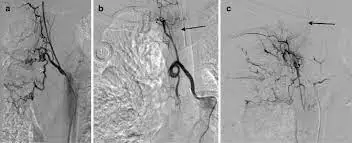
• The approach is to inject using a contrast dye; an X-ray view of the blood vessels would be provided by the X-ray showing the doctor the exact source of bleeding.
• Once the bleeding artery has been identified, tiny particles (embolic material) are injected to block it.
• These particles prevent blood flow through the damaged vessel, preventing further bleeding. - Wrapping Up the Procedure
• The catheter is withdrawn, and a small bandage is placed over the insertion site.
• The blocked artery does not interfere with normal lung function because other healthy blood vessels continue to supply oxygen to the lungs.
The operation usually takes less than an hour, with patients feeling relief from bleeding almost immediately. First and foremost, if the patient is to have BAE, he should agree to have it done. The whole procedure involves using a puncture, usually through a groin or wrist puncture.
Why Is BAE the Best for Severe Hemoptysis?
- Rapidly Effective: Stops bleeding within minutes to avert asphyxia and further blood loss.
- Minimally Invasive: No open surgery; only a tiny puncture under the skin.
- Safe: Highly targeted-only occludes the bleeding vessel, not the healthy lung tissue.
- Short Recovery: Home in 24 to 48 hours, usually.
- Prevention of Recurrence: There is a significant reduction in the chances of repeat bleeding episodes.
What to Expect After BAE
- It is just hours of watching for complications with the patients.
- There can be some mild chest heaviness or a low fever for a few days after the procedure, but this is easily manageable with oral medications.
- The patient is asked to rest for one or two days, not to any kind of straining or heavy exercise.
- Follow-up checkups are mandatory to ensure the complete success of treatment.
Is There A Risk?
Like all procedures, BAE does have risks. These are rare, however. The following may occur:
Mild chest discomfort or temporary difficulty swallowing (resolves within a few days).
low chances of rebleeding, but repeat embolization can resolve this.
If a healthy artery is occluded, lung function is affected in rare cases, though expert doctors minimize this risk.
Overall, BAE boasts a success rate of over 90 percent and is considered one of the best treatments for severe hemoptysis.
Conclusion
Hemoptysis, when severe, may prove fatal and requires immediate medical assistance. Bronchial Artery Embolization (BAE) is a breakthrough in stopping life-threatening bleeding from a lung in a few minutes and without the dangers of open surgery. It is fast, safe, and very efficient, enabling quick patient recovery and breathing easily again.
When faced with severe coughing with blood, rush to the doctor without delay; otherwise, early intervention with BAE could save a life.
Ready to Discuss?
Share your symptoms and reports with our team. We help you understand whether you need treatment now or simple lifestyle changes and follow‑up.