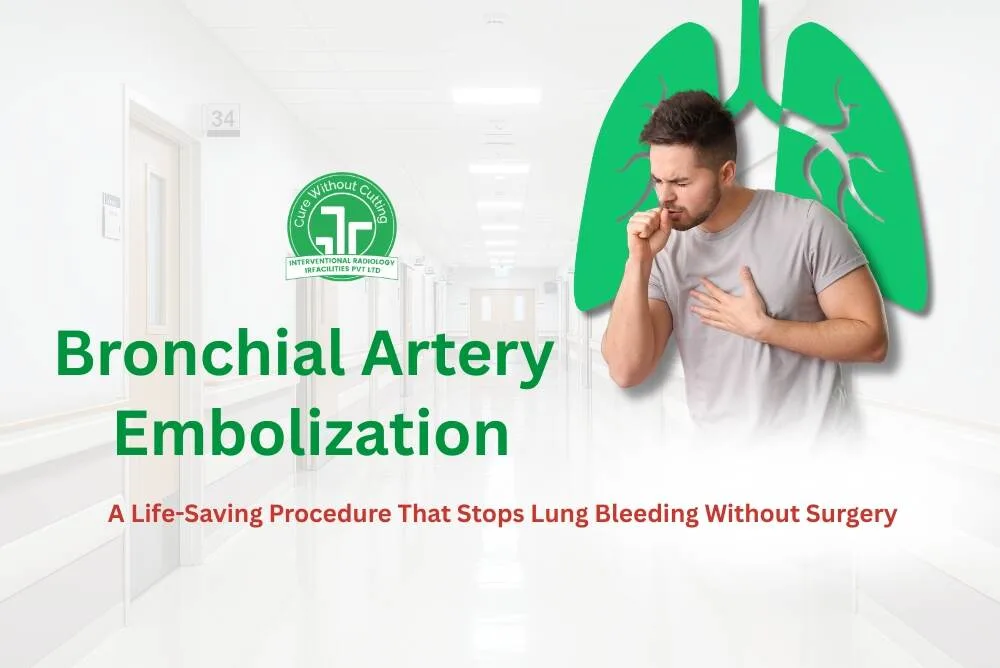
Bronchial Artery Embolization: A Life-Saving Procedure That Stops Lung Bleeding Without Surgery
TreatmentMany people haven't ever heard of embolization of the bronchial artery until they or someone they love end up in an emergency room, coughing up blood in alarming quantities.
The moment that happens transforms everything.
The medical term used to describe exhaling blood from the lung can be described as hemoptysis. If the amount of blood becomes significant -- medical professionals consider massive hemoptysis to be more than 600 to 200 milliliters of blood in one hour -- it ceases being a symptom but becomes a danger to the life. The airway is filled. Breathing becomes difficult. If you don't get prompt, specific treatment, the result can be fatal.
For a long time the most common answer was open chest surgery. Cut down, locate the blood vessel and and then remove any affected tissue from the lung. It worked, but it also came with high cost. A long anesthesia. The recovery process can take weeks. A high rate of complications, particularly those who are already sick.
Then, there was a better alternative.
What Exactly Is Bronchial Artery Embolization?
Bronchial artery embolization is a procedure carried out by an interventional radioologist. There is no opening of the chest. No lung tissue is removed. Instead surgeon threads small elastic catheter into a tiny puncture on the groin or wrist. He and guides it to the artery that is bleeding using live X-ray imaging and then blocks the vessel from inside by using small embolic pieces.
The bleeding ceases. The patient is able to breathe easier. All of this can be done without making any surgical cut.
It's almost too perfect to be true -- however, the evidence backs the claim. When performed by a skilled surgeon the bronchial artery embolization procedure can achieve high rates of success, ranging from 85 to 90 . Patients who could have waited weeks to recover from thoracic surgery, are typically moving around within two to three days.
Why Do These Arteries Bleed in the First Place?
There is a fact that many people are unaware of that your lungs have two distinct blood supplies.
The pulmonary arteries control gas exchange. They transport blood that is deoxygenated to the lungs to take in oxygen. However, the bronchial arteries differ from the others. They supply the fresh and oxygenated blood into the lung tissues providing oxygen to the airways and ensuring that everything is running smoothly.
In healthy lung tissue, bronchial arteries are relatively small and silent. However, in cases of tuberculosis or chronic bronchiectasis fungal diseases or lung cancer these vessels grow abnormally large bent, fragile, and twisted. They expand under pressure. The walls of their cells weaken. Then, eventually, they break and release blood directly through the airway.
This is the stuff that patients cough up. That is exactly the bronchial artery that embolization is designed to target.
The Procedure, Explained in Plain Language
If you or a loved one is planning for this process Here is a straightforward simple explanation of what happens.
Prior to the procedure begins: An CT angiogram scan must be first performed. The interventional radiologist will receive an exact map of the bronchial arterieswhich shows where the abnormal vessels are, how numerous they are and where the blood will likely come from. An effective plan can make the process more efficient and safer.
Starting: You will be given a local anesthesia as well as an sedative that is mild. You'll be awake but calm. A small catheter, thinner than a pen is placed through the femoral vein in your groin or through the radial artery inside your wrist. The patient will feel nothing.
The problem is identified: The catheter is passed through your aorta, and then into the bronchial arteries. The contrast dye is injected to ensure that the radiologists can view your blood vessels real-time using a fluoroscopy screen. The blood vessels that are bleeding are clearly visible.
Blocking the bleeding: When the vessel that is responsible are found tiny embolic agents such as microspheres and polyvinyl alcohol particles or metallic coils are introduced via the catheter. They effectively block blood vessels. Blood cannot flow through. The hemorrhage ceases.
After that: The catheter is removed. A small bandage is placed over the site of puncture. The patient is monitored for a short period of time before being transferred to a normal room. The majority of patients experience an impressive decrease of bleeding in the initial 24 hours.
The total time for the procedure is approximately 1 to 2 hours.
Who Actually Needs This Procedure?
Bronchial artery embolizations are not only for emergencies of the worst kindhowever, it is a great option for the situations. It is also utilized for patients with
- Hemoptysis recurring that comes back, despite treatment
- Post-tuberculosis, bronchiectasis -- very frequent in India
- Aspergilloma is a fungal sphere that forms in the old TB cavities and causes a loss of blood vessels
- Lung cancer that has bleeding involvement
- Bronchiectasis due to chronic respiratory infections
- patients who're too weak or medically fragile to undergo open surgery
This is a bigger issue than many people realize. A lot of patients suffering from serious bleeding in the lungs also have severely damaged lung tissue or low oxygen levels or have other serious health issues. Surgery is a risky procedure. Bronchial embolization provides patients with a real choice -- a secure and effective procedure that their body is able to manage.
The Risks Are Real - Which Is Why the Doctor's Skill Matters
The embolization of the bronchial artery is safe however it's not without nuances. The bronchial vessels are located near the spinal anterior arterythe vessel that delivers oxygen to the spine. If a clot of embolic material is accidentally inserted into the artery, it could cause paralysis.
This kind of complication is uncommon when performed by a skilled practitioner. It is, however, the single main reason for why this procedure shouldn't be done in a hurry or by someone who does not have deep, trained on interventional radiology.
Dr. Sandeep Sharma has built his practice on this kind of accuracy. His method of bronchial artery embolization is based on thorough pre-procedure image analysis, meticulous selection of the catheter and a meticulous approach to embolization, all of which are aimed to maximize effectiveness while minimizing risk.
Patients who go to IRFacilities to undergo this procedure do not walk into a typical radiology clinic that only deals with vascular cases. They're entering an interventional center that is focused and where this kind of care is most commonplace, all the time.
Recovery: What the First Few Days Look Like
The majority of patients are pleasantly surprised by how easy the healing process is.
A few suffer from slight chest pain or mild fever within the initial 24-48 hoursan inflammatory response that is normal when the body adjusts in response to blockages. A mild difficulty swallowing may occur in the event that the esophageal vein was near the area of treatment. These symptoms are not long-lasting and easily managed with the help of standard medications.
What they don't experience is the discomfort in the chest, breath problems and physical limitations which follow open chest surgery. The difference in the quality of recovery is significant.
In two to three days, the majority of patients are ready to leave for home.
One Procedure Is Not Always the End of the Story
It is important to be clear about this: bronchialartery embolization stops bleeding. It doesn't cure the illness that triggered the bleeding.
Tuberculosis and bronchiectasis are the most common disease -- these diseases need their own long-term treatment strategies. Once BAE is able to stabilize the acute crisis The focus is now on treating the root cause using Pulmonologists, infectious diseases specialists or oncologists, based on the diagnosis.
Imagine it as follows: BAE closes the emergency exit which the disease had used. There is now enough time and stability to tackle the actual issue in a proper manner.
The Bottom Line
If you know someone experiencing a recurrent or severe hemoptysis, the main factor is to don't assume that it is their only solution and don't wait too long before acting.
Bronchial artery embolization can be well-proven, precise and much less demanding than traditional surgical procedures. When done properly with the proper imaging, a meticulous procedure, and a seasoned doctor such as Dr. Sandeep Sharma -- it can help patients get to a healthy and stable life.
Reach out. Ask questions. Make sure you choose a provider built on experience rather than ease of use.
Ready to Discuss?
Share your symptoms and reports with our team. We help you understand whether you need treatment now or simple lifestyle changes and follow‑up.